If you’re asking, what is the value of my car?, you’re likely considering selling — or at least exploring your options.
A car’s value isn’t based on a single estimate or online tool. It’s shaped by factors like condition, demand, timing, and location. Even two identical vehicles can receive different offers depending on where they’re sold.
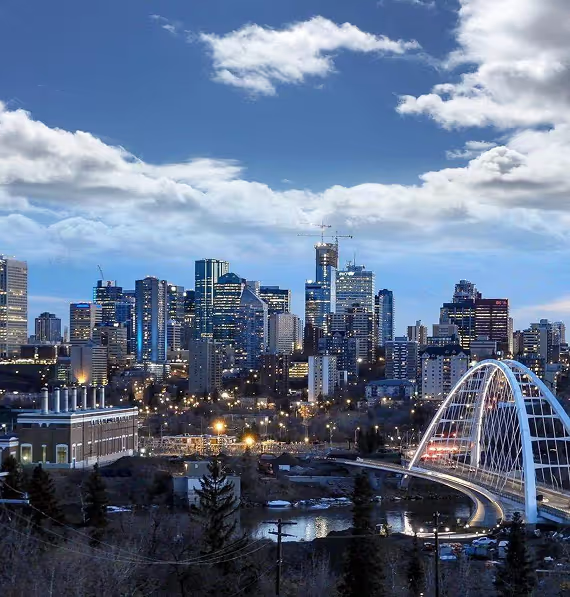
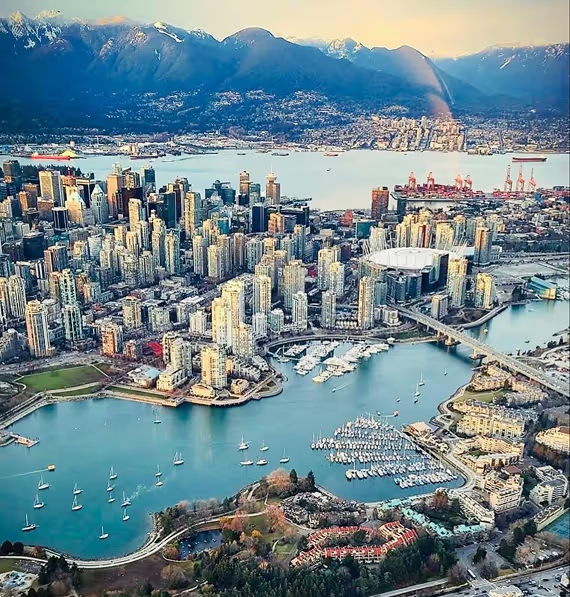
If you’ve ever thought about selling your car in Edmonton, Calgary, or Vancouver, understanding how local market conditions affect value can help you set realistic expectations before making a decision.
Mileage plays a major role in determining value, but it’s not just about the number on the odometer.
Lower mileage generally signals less wear, but buyers also look at how the vehicle was driven and maintained. A higher-mileage car with consistent servicing can hold more value than a low-mileage vehicle that’s been neglected.
When determining the value of a car, buyers consider both mechanical and cosmetic condition.
This includes:
In colder climates like Edmonton and Calgary, signs of winter wear can affect value if a vehicle hasn’t been properly maintained.
Make, Model, and Year
Some vehicles naturally retain value better than others.
Cars with a reputation for reliability, lower repair costs, and strong resale demand tend to depreciate more slowly. The model year matters, but not as much as overall condition and service history.
A well-maintained older vehicle can often be worth more than a newer one with unresolved issues.
Maintenance Records and Service History
If you’re trying to understand the value of your car, paperwork matters.
Service records give buyers confidence that the vehicle has been cared for properly. Routine maintenance, major repairs, and manufacturer-recommended services all play a role in perceived value.
Accidents don’t automatically make a car undesirable, but they do influence value.
Buyers typically consider:
A clean accident history generally results in a higher valuation, even if the difference isn’t immediately visible.
Vehicle value isn’t universal — it’s local.
Demand varies by region:
Local buying habits, fuel prices, and supply all influence how much a vehicle is worth in a given city.
When you sell can affect what your car is worth.
Certain vehicles perform better at specific times of year:
Seasonality can shift value more than many sellers expect.
The method you choose can directly affect how much you receive.
Private sales may offer higher asking prices, but they also come with:
Dealership trade-ins prioritize convenience but often result in lower offers due to resale margins.
Direct buyers that specialize in purchasing vehicles can offer a balance between speed, transparency, and fair market pricing.
There’s no single number that defines the value of your car.
Value exists within a range, shaped by:
That’s why online calculators often produce wildly different estimates. A personalized evaluation that considers local market conditions is far more reliable.
Why A Private Sale of A Car Isn't Always The Best Option
Why Using a Car Buying Service Beats Trading Your Car Into a Dealership in Alberta
Best Place to Sell a Vehicle: Choosing the Best Option
Cars for Cash: What It Really Means When Selling Your Vehicle
Check Out Our 5 Star Google Reviews